History
Our History
Alabaster is a stone steeped in deep history and refined aesthetic taste. Its delicate translucency and responsiveness to the chisel have made it a favorite of craftsmen across different eras and cultures.
Its story begins in the river-valley civilizations of the 4th–3rd millennia BCE in Egypt and Mesopotamia alabaster was used to create vessels and statuettes, prized for its ability to take the finest carving and for its soft, luminous glow. The calcite variety was especially highly valued in Egypt.
In the era of Greece and Rome alabaster served as a material for decorative objects, inlays, and panels; in late antiquity and the early Middle Ages production declined noticeably, but the stone did not disappear from the practices of artists and artisans.
In the Islamic centers of the Middle East and the Mediterranean alabaster was widely used for ornamental carving and mosaic insets, where it emphasized the elegance of geometric and floral motifs. In Eastern Europe and Russia, the stone was used for icon panels and exquisite decorative carving, finding its place in both sacred and everyday culture.
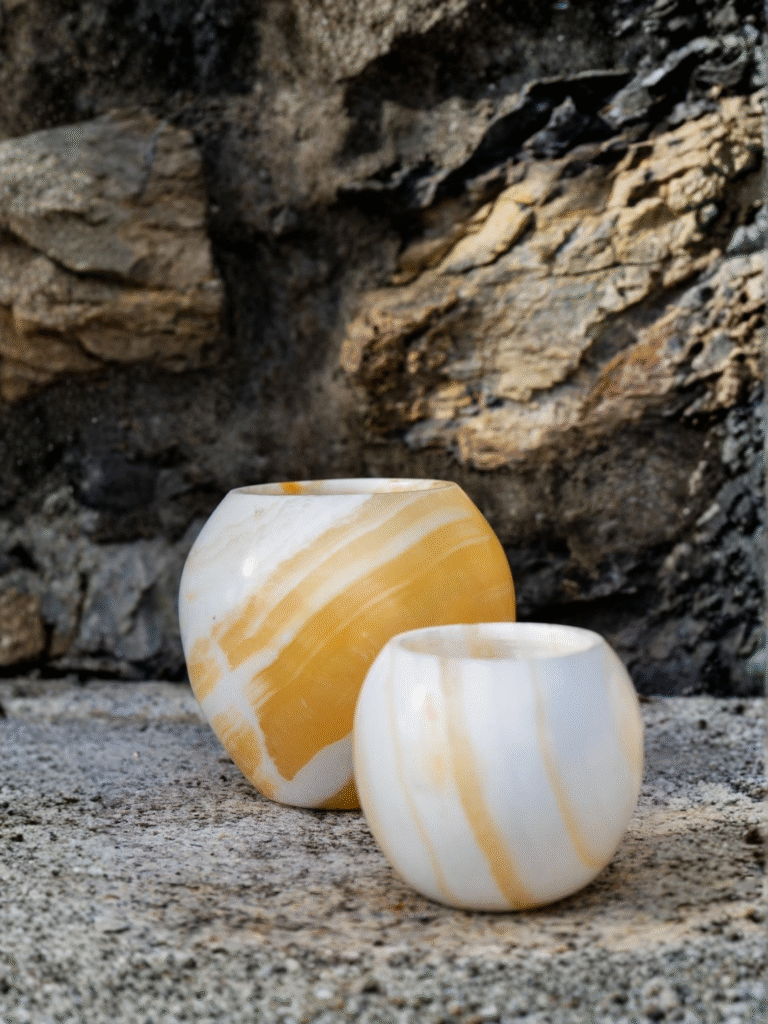
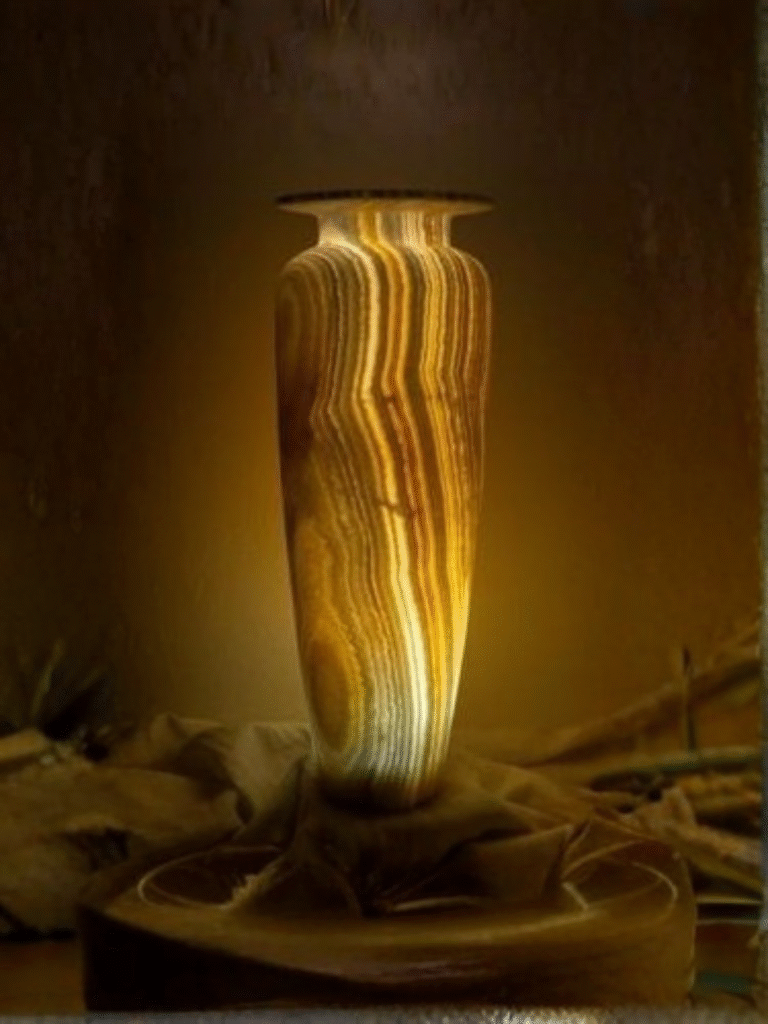
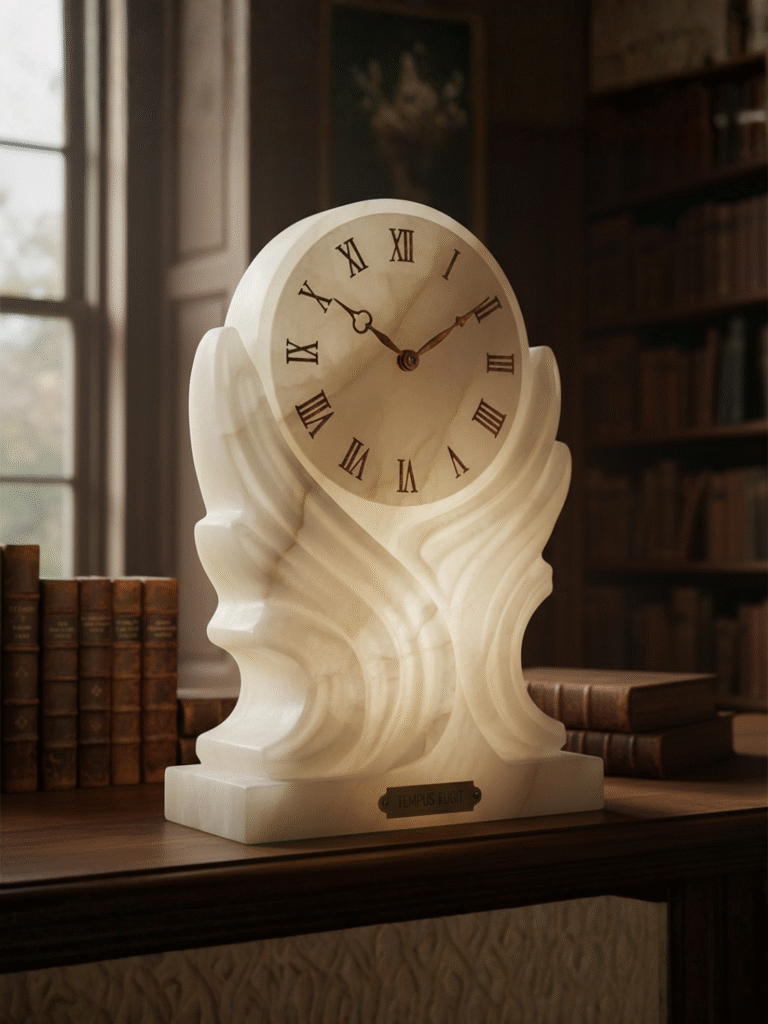
With the onset of the Renaissance in Italy, artisan workshops revived and developed the art of working with alabaster, transforming it into a material for the most delicate artistic carving and elegant decorative compositions.
In the 19th–20th centuries mechanization and new processing technologies expanded alabaster’s possibilities: fine polishing, mechanical cutting, and mass production of decorative items emerged, making the stone more widely accessible while preserving its refined character.
Alabaster remains a symbol of fine craft tradition and aesthetic refinement: from ancient sacred objects to factory-made ornaments — its soft light and capacity for delicate carving continue to inspire craftsmen and connoisseurs.
Egyptian Alabaster
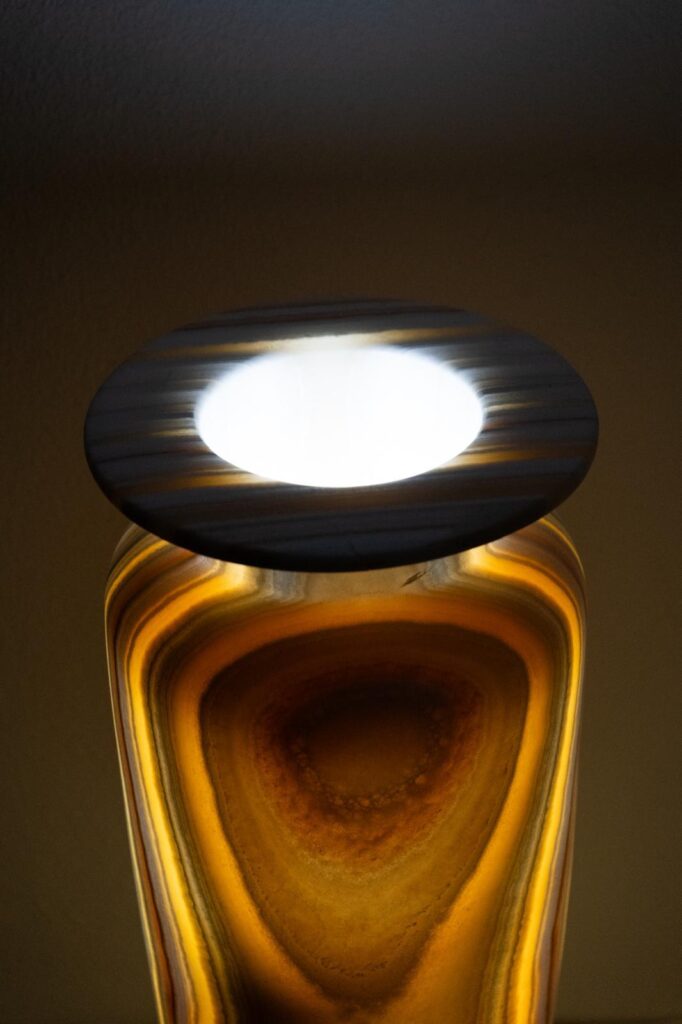
Egyptian Alabaster is a natural, rare, and noble stone that was valued even in ancient civilizations. It is softer than many other rocks, which makes it easy to work and relatively light in weight, making it well suited for carving. In a single piece, alabaster can combine several appealing qualities: the smooth lines and fluidity of marble; the luminous glow of quartz; and the practicality comparable to granite. But its chief characteristic is its soothing and striking translucency.
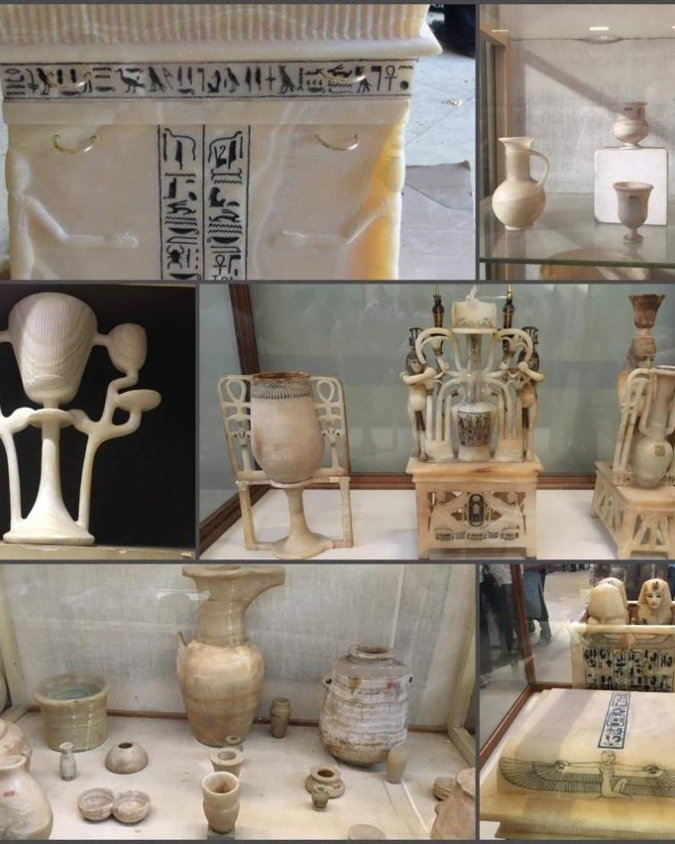
The ancient Egyptians made extensive use of alabaster—for decorative, practical, and religious purposes. They crafted bowls for food, vessels for oils and perfumes, statuettes, vases, and many other elegant objects from it. Alabaster was regarded as sacred and was used in burial rituals and the mummification of nobility. For example, the sarcophagus of Pharaoh Seti I was carved from a single block of alabaster and is believed to still be on display in London. Many more alabaster finds from the tombs of Tutankhamun and Ramses are now housed in the collections of the Egyptian Museum in Cairo (with plans to relocate them to the Grand Egyptian Museum once it opens).
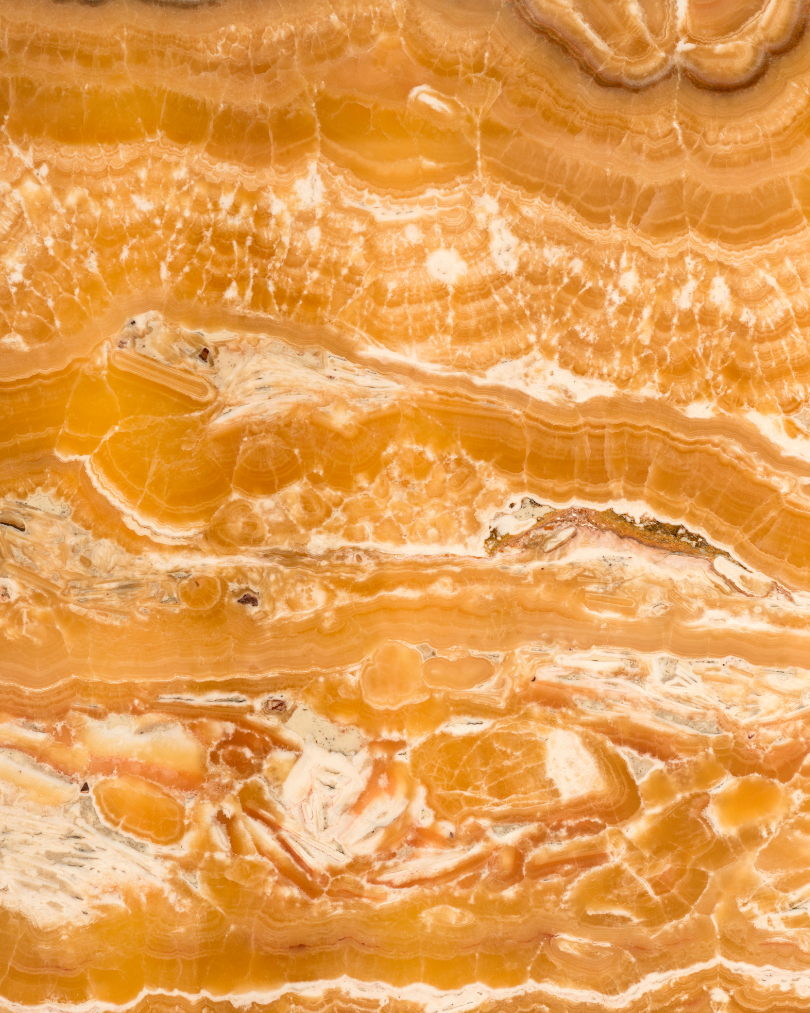
The attractive veins and layers of alabaster formed over millions of years, making it a limited resource whose extraction and trade are tightly controlled by the Egyptian government, which increases its value. The natural color range of alabaster varies from ivory to amber tones; when desired, the stone can be dyed into other colors—such as blue, red, or gray.